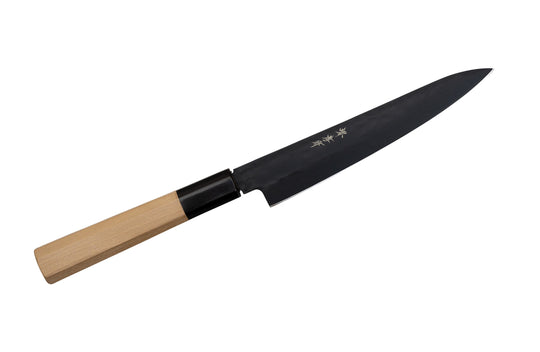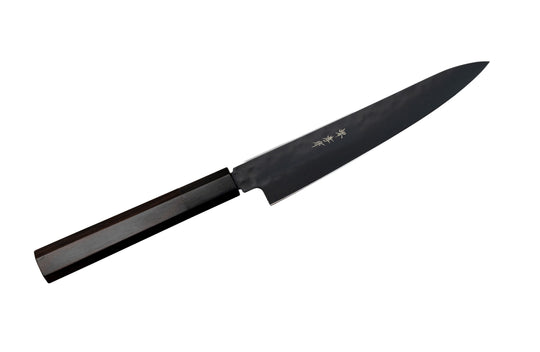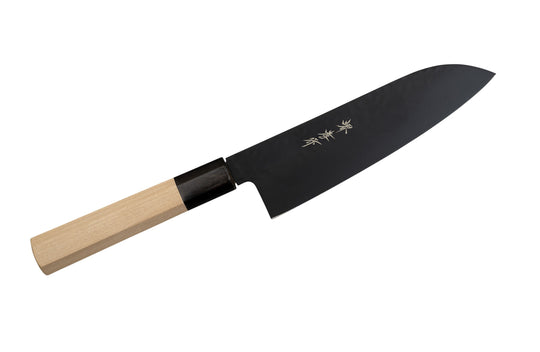


堺孝行 黒影 牛刀 210mm ウェンジ八角柄 Sakai Takayuki
鋼材
V金10号 ハイカーボンステンレス(鎚目・黒フッ素加工)
口金
水牛角
Handle Materials
ウェンジ 天然木(八角柄)
刃渡り
210 mm
生産地
大阪府 堺
軽さ
切れ味
研ぎやすさ
錆びにくさ
About Blade

刃材に採用されたV金10号(VG10)は、武生特殊鋼材が開発した日本を代表するハイカーボンステンレス鋼です。HRC60-62という炭素鋼に迫る高硬度を実現し、鋭い切れ味が長く続きます。ステンレスの錆びにくさと炭素鋼の鋭利さを兼ね備えた稀有な鋼材です。
刃面には職人が一打ずつ刻む鎚目(つちめ)を施し、その上に黒のフッ素加工を重ねることで、水分や粘りのある食材も刃離れよく切り進められます。両刃仕様のため、利き手を問わずお使いいただけます。
About Handle

柄に採用されたウェンジは、中央アフリカ原産の銘木で、深いチョコレートブラウンに浮かぶ独特の縞模様が美しい高級木材です。比重0.9前後の高い密度を持ち、硬さと耐久性に優れます。
落ち着いた色合いはモダンなキッチンにも和の空間にも調和します。八角形の柄は滑りにくく手に馴染み、刃と柄の境目には水牛角の口輪を配して接合部を保護しています。
Producing Area
この包丁は、経済産業大臣指定の伝統的工芸品「堺打刃物」の産地である大阪府・堺で作られています。
堺では鍛冶・刃付け・柄付けといった各工程をそれぞれ専門の職人が担う分業体制が約600年にわたり受け継がれており、一本一本が熟練の手仕事によって最高水準の切れ味に仕上げられています。
堺 Sakai, Osaka

 ©Sakai City, JAPAN
Sakai is a commuter town located in the Southern area of Osaka, and is the second most populous city in the prefecture after Osaka City.
Sakai is known for having many ancient burial mounds. Once, blacksmiths gathered and lived in Sakai from all over Japan to create tools for the construction of the mounds. This is believed to be the reason why Sakai is famous for forging.
In the Edo period, the shogunate's order included exclusive production of "Tobacco knives" in Sakai - knives for chopping tobacco leaves, which led to Sakai's fame for bladesmithing. As time went by, the technique has continued to be inherited by craftsmen over countless generations. To date, Sakai has been producing stunningly sharp knives with the best quality.
The production of forged knives in Sakai is based on the division of labor within each district.
To complete a single knife, each step, from forging and adding a blade, to attaching a handle, is handled by traditional specialists. It is expected to include more than 30 processes of knife creation until completion.
The significance of Sakai knives lies in the excellent forging and sharpening techniques which determine the edge of the blade.
Knives from Sakai are said to be used by over 90% of professional chefs of Japanese cuisine. Sakai is the leader of the world-class culture of Japanese bladesmithing.
Precautions For Use
To prevent rust
- Use dish soap to thoroughly wash the knife, and immediately wipe moisture away with a dry cloth before storage.
To prevent damage
- Do not ever put the knife in the dishwasher.
- Do not hold the knife over a fire or put in the oven. To disinfect the knife, please use hot water.
To prevent chips
- Do not use the knife on a hard surface, such as on a metal, stone, or glass cutting board.
- Do not cut hard objects, including frozen food and bone-in meat.
- Avoid putting multiple knives in the same drawer, as they may touch each other and chip.
For safety
- Handle the blade with care.
- Store the knives in a safe place and out of reach of children at all times.